
Organic Lawn Care Service: What It Is and How to Hire One
You want a green lawn without soaking your yard in chemicals your kids and pets walk through every day. That's what sends most homeowners searching for a lawn care service organic companies actually offer, rather than the standard synthetic spray-and-go programs most crews default to. It's a fair concern, especially here in the Midlands, where heat and humidity push a lot of companies toward heavier chemical use to keep grass alive.
An eco friendly lawn care service isn't just marketing language. It means specific products, timing, and soil practices that build healthy turf without relying on synthetic pesticides or fast-release fertilizers. If you've been Googling this term, you're likely trying to figure out what actually qualifies as organic, and how to tell a legitimate provider from one that just slaps the word on a truck.
This article breaks down what an environmentally friendly lawn care service really includes, how organic treatments differ from conventional ones, and the questions to ask before you hire someone for lawn care and landscaping across Columbia, Blythewood, or Elgin. You'll walk away knowing exactly what to expect and what red flags to avoid.
Why organic lawn care benefits your yard, family, and pets
Most homeowners don't start researching organic options because of an abstract environmental concern. They start because a kid rolled around in the grass an hour after a spray truck left, or a dog started licking its paws after a treatment. Synthetic pesticide exposure is the number one reason Midlands families switch to organic programs, and it's a legitimate one. The Environmental Protection Agency notes that children are more vulnerable to pesticide exposure than adults because of their size and developing systems, which is exactly why re-entry intervals exist on synthetic labels in the first place. Organic treatments remove that guessing game. You're not calculating how many hours need to pass before the yard is safe again.
A lawn that's safe to walk on the same day it's treated isn't a bonus feature. It's the whole point of going organic.
Beyond the immediate safety question, soil health is where organic lawn care actually earns its keep. Synthetic fertilizers feed the grass directly with fast-release nitrogen, but they do little for the microbial life underground that makes soil productive long-term. Organic programs build that biology back up using compost, humic acid, and slow-release organic nitrogen sources. Over a season or two, you get soil that holds water better, resists compaction, and needs less supplemental feeding. That's not a marketing claim, it's basic soil science that any agronomist will confirm. Columbia's clay-heavy soil in particular benefits from this approach, since heavy clay struggles to drain and organic matter helps loosen it up.
Less runoff into local waterways
Columbia and Blythewood sit close to several creeks and tributaries that eventually feed into the Congaree and Broad Rivers. Synthetic fertilizers and pesticides applied incorrectly, or right before a heavy Midlands thunderstorm, wash off lawns and into storm drains fast. The EPA has documented how excess lawn fertilizer contributes to nutrient pollution in waterways, which fuels algae blooms and harms local fish populations. Organic fertilizers release nutrients more slowly and bind to soil rather than sitting on the surface waiting for the next rain event, so less product ends up in the water supply .
Pet and family safety, day to day
If you've got a dog that spends most of the day outside, or kids who play barefoot in the yard after school, the day-to-day difference is real. Here's what typically changes when you switch to organic treatments:
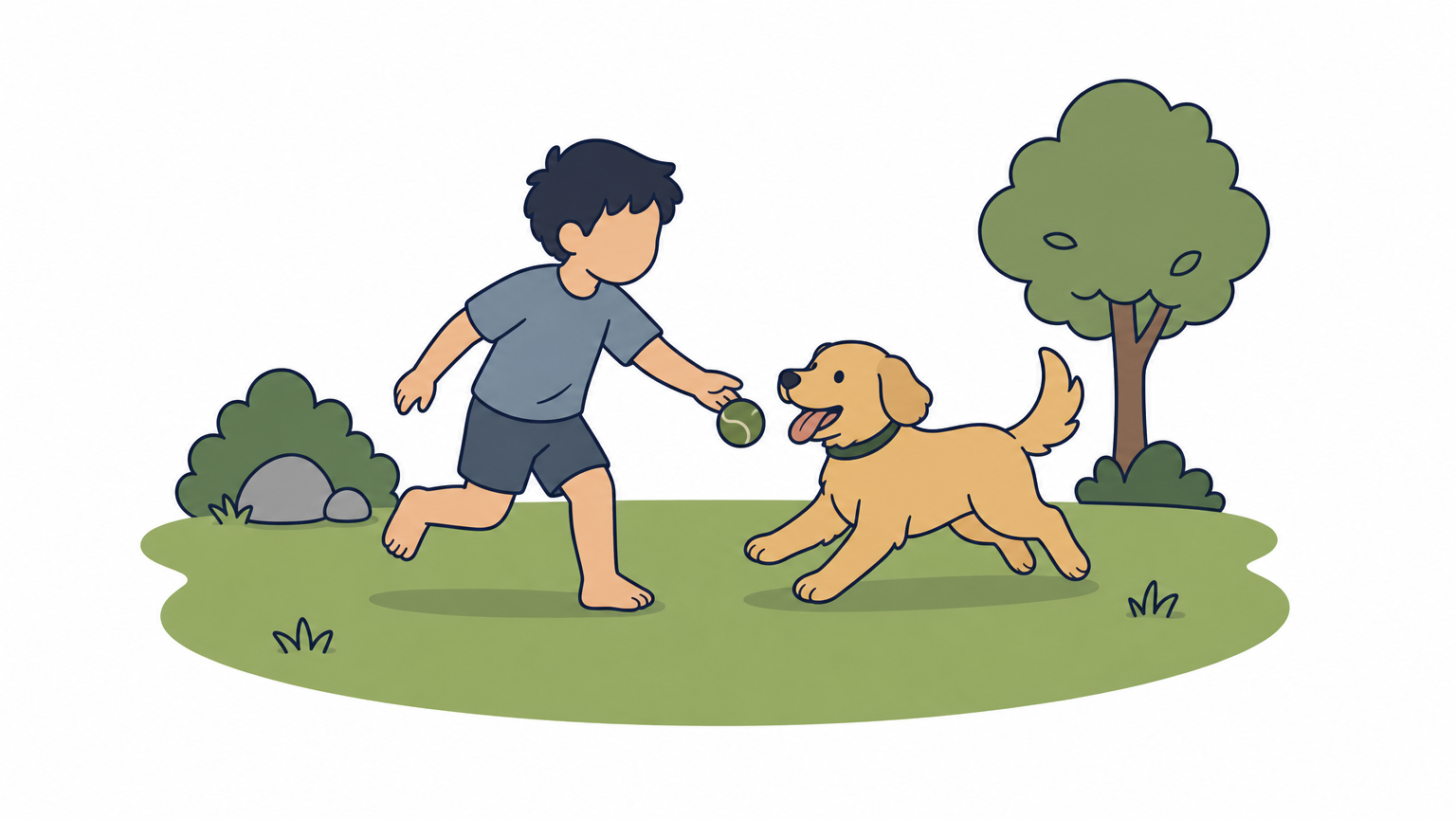
- No posted re-entry warning signs needed after each application
- Pets can walk, dig, and roll in the grass the same day
- Fewer allergic reactions and skin irritation from residual chemical contact
- No lingering chemical odor after treatment, which matters for anyone sensitive to smell
- Reduced risk of accidental ingestion if a toddler or pet eats grass
These aren't hypothetical benefits. They're the practical, everyday reasons homeowners in Elgin and the surrounding Midlands region make the switch and stick with it.
How to hire a qualified organic lawn care service
Finding a company that says "organic" on its website is easy, and the same rules apply here as with spotting a qualified lawn care crew of any kind. Finding one that actually runs an organic program takes a bit more digging. Product transparency is the first thing to check. A qualified provider should be able to tell you exactly what's in their fertilizer and weed control mix, not just hand you a vague "all natural" line. If a technician can't name the products they're spraying on your lawn, that's your answer right there.
If a company can't tell you what's in the bag, they don't have an organic program, they have a slogan.
Getting licensing and insurance confirmed matters just as much with organic providers as with conventional ones. South Carolina requires pesticide applicators to be licensed through Clemson University's Regulatory Services, even for many organic-approved products, so ask to see that credential before signing anything. A company that's been doing this for years locally, rather than one that popped up last season chasing a trend, usually has a much better handle on how Midlands clay soil and humidity affect organic timing, including the turf diseases that show up in South Carolina heat.
Questions to ask before signing a contract
Bring this list to your first conversation with any provider you're considering:
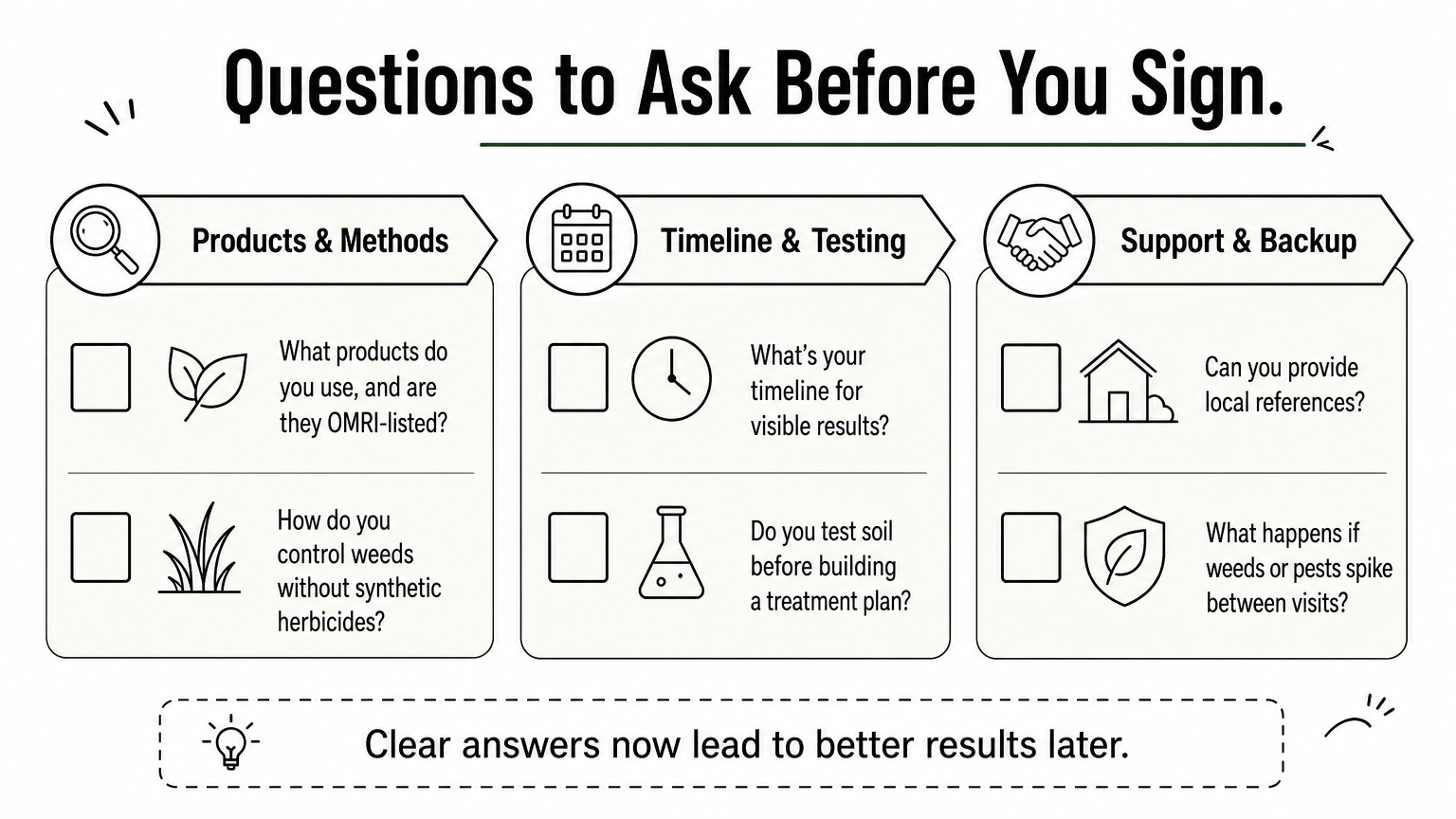
- What specific products do you use, and are they OMRI-listed or similarly certified?
- How do you handle weed control without synthetic herbicides?
- What's your timeline for seeing visible results?
- Do you test soil before building a treatment plan?
- Can you provide references from local customers using the same program?
- What happens if weeds or pests get out of hand between organic treatments?
Local experience beats generic promises
Another sign of a legitimate provider: they talk about your specific soil and climate, not generic turf advice pulled from a national franchise script. Columbia's heat, humidity, and clay soil behave differently than a lawn in Ohio or Colorado, and organic programs need to account for that. A company built around crew-based service models, where the same crew visits your property each time, tends to catch soil and turf issues earlier because they know what your lawn looked like last month. That consistency matters more with organic programs than conventional ones, since organic results depend on cumulative soil building rather than one quick chemical fix.
What to expect during organic lawn treatments
Going organic doesn't produce an overnight transformation, and any technician who promises one is overselling. Realistic timelines matter here: most Midlands lawns take one full growing season, roughly six to eight months, before the soil biology catches up enough to show visibly thicker, greener turf. Your provider should walk you through this timeline upfront rather than let you assume week-two results that match a synthetic spray program.
Organic lawn care rewards patience with soil that keeps improving, not a quick green fix that fades by August.
Soil testing kicks off a legitimate program, and it should happen before the first application goes down. A soil test result tells the crew what your yard actually needs instead of applying a one-size-fits-all blend, which is the same logic behind matching fertilizer to Columbia soil and turf type. From there, a typical organic season in Columbia looks like this:
- Early spring: soil test, compost tea or humic acid application, pre-emergent organic weed suppression timed to the April weed control window in Columbia
- Late spring: slow-release organic fertilizer, spot treatment for emerging weeds
- Summer: aeration on compacted red clay if compaction shows up, continued organic feeding tied to soil test results
- Fall: overseeding in Columbia SC paired with organic fertilizer to rebuild thin patches before winter
Weed control looks different too. Corn gluten meal and other organic pre-emergents suppress germination rather than killing established weeds on contact, so you'll likely see some hand-pulling or spot treatment worked into the plan, especially in year one. Ask your provider directly how they handle a bad weed outbreak between visits, since that's where a lot of organic-only companies fall short.
Don't expect the same instant, uniform green that synthetic quick-release nitrogen produces within 48 hours. Gradual, even growth is the actual sign the program is working, not a sudden color change. A crew that documents soil test results and photographs progress at each visit gives you something concrete to track, rather than just a verbal promise that things are improving. If you're weighing this against Sparta Lawn Care's fertilizer and weed treatment programs, ask specifically which parts of the treatment plan use organic-approved inputs versus conventional ones, since many providers run a hybrid approach.
Organic vs. chemical lawn care: cost and results
Money is usually the first objection homeowners raise when they start comparing an organic lawn care service to a conventional spray program. Organic treatments typically run 10 to 25 percent higher per visit than synthetic programs, mostly because compost, humic acid, and OMRI-listed inputs cost more to source and apply than bagged synthetic fertilizer, so it helps to know what a lawn care program costs to begin with. That gap narrows over a few seasons, though, since healthier soil needs less supplemental feeding and fewer emergency treatments for pest or disease outbreaks.
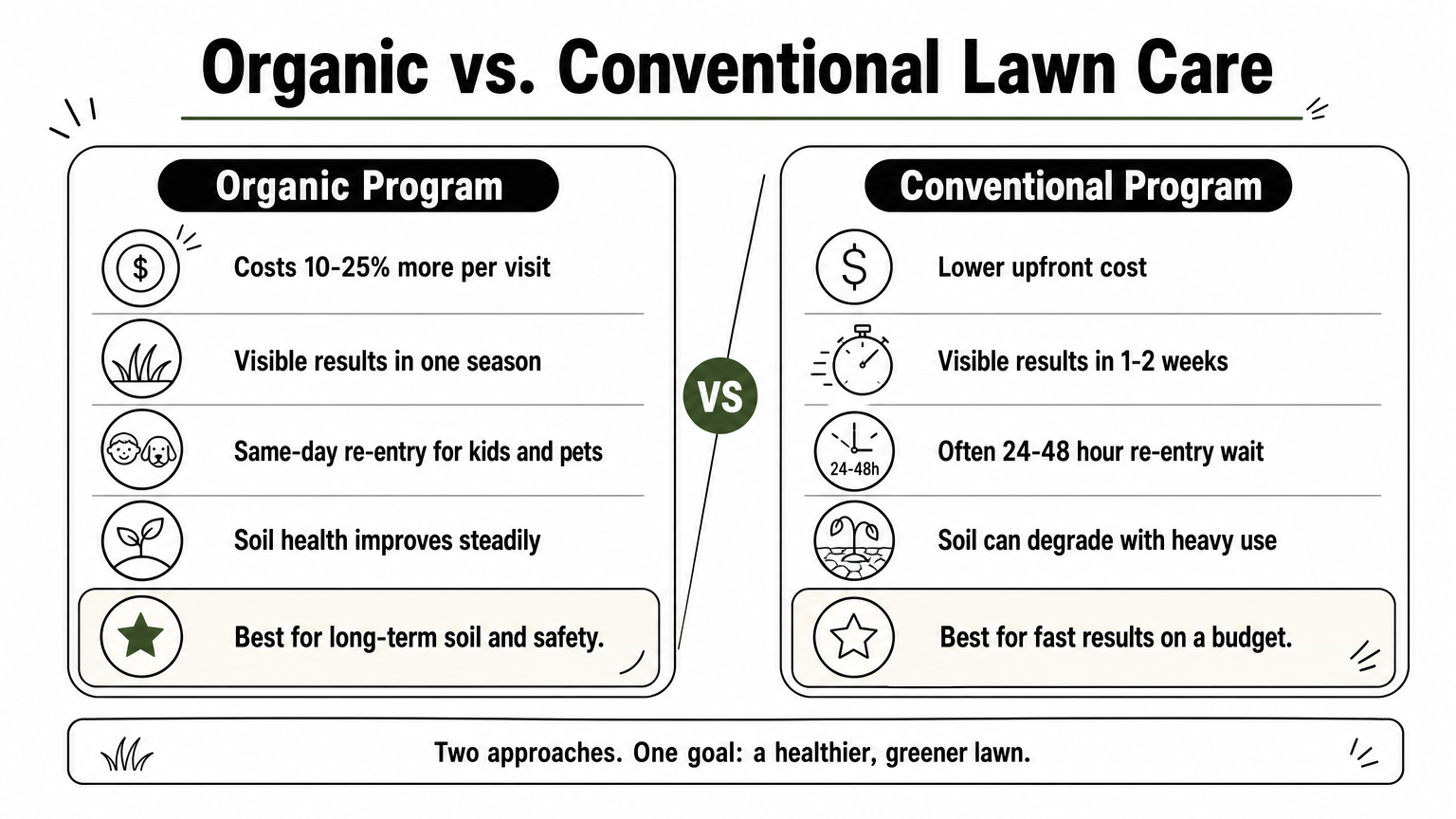
You pay a little more upfront for organic care and a lot less in soil repair bills down the road.
Results follow a different curve too. Synthetic programs deliver fast, uniform green within days because quick-release nitrogen forces top growth immediately. Organic programs build slowly from the roots up, so the visible payoff takes a season but tends to hold up better under Midlands summer heat and drought stress once established.
| Factor | Organic Program | Conventional Program |
|---|---|---|
| Cost per treatment | Higher (10-25% more) | Lower upfront |
| Visible results | 1 season (6-8 months) | 1-2 weeks |
| Re-entry time for kids/pets | Same day | Often 24-48 hours |
| Long-term soil health | Improves steadily | Can degrade with heavy use |
| Drought resilience | Stronger over time | Weaker without irrigation |
| Runoff risk | Lower | Higher |
Weighing these numbers side by side, most Midlands homeowners land on a hybrid decision rather than an all-or-nothing one. Some properties, especially those with young kids, pets, or a spot near a creek or drainage ditch, justify the higher organic cost immediately. Others stick with a conventional program for tougher weed pressure but ask their provider to swap in organic-approved products where it matters most, like around play areas or garden beds. Talk through your specific property with whoever you hire rather than assuming one approach fits every yard on your street, since soil type, sun exposure, and existing weed pressure all shift the math in either direction.
Growing a healthier lawn, naturally
Going organic isn't about chasing a trend or paying more for the sake of it. It's about building soil that actually improves year over year instead of masking problems with a quick synthetic fix that fades by August. You've seen the tradeoffs now: slightly higher cost upfront, a longer wait for visible results, and a much safer yard for kids and pets in the meantime.
Whichever direction you choose, the details matter more than the label on the invoice. Ask hard questions , check credentials, and find a crew that knows how Midlands clay and humidity behave before they touch your lawn. A provider who can explain their soil test results and walk you through a real timeline is worth more than one who just says "organic" and hopes you don't ask follow-ups.
If you're ready to talk through what fits your property, reach out to Sparta Lawn Care about a lawn care and maintenance program for your Midlands yard and get a straight answer.